How to Tell Handwoven Ikat From a Print
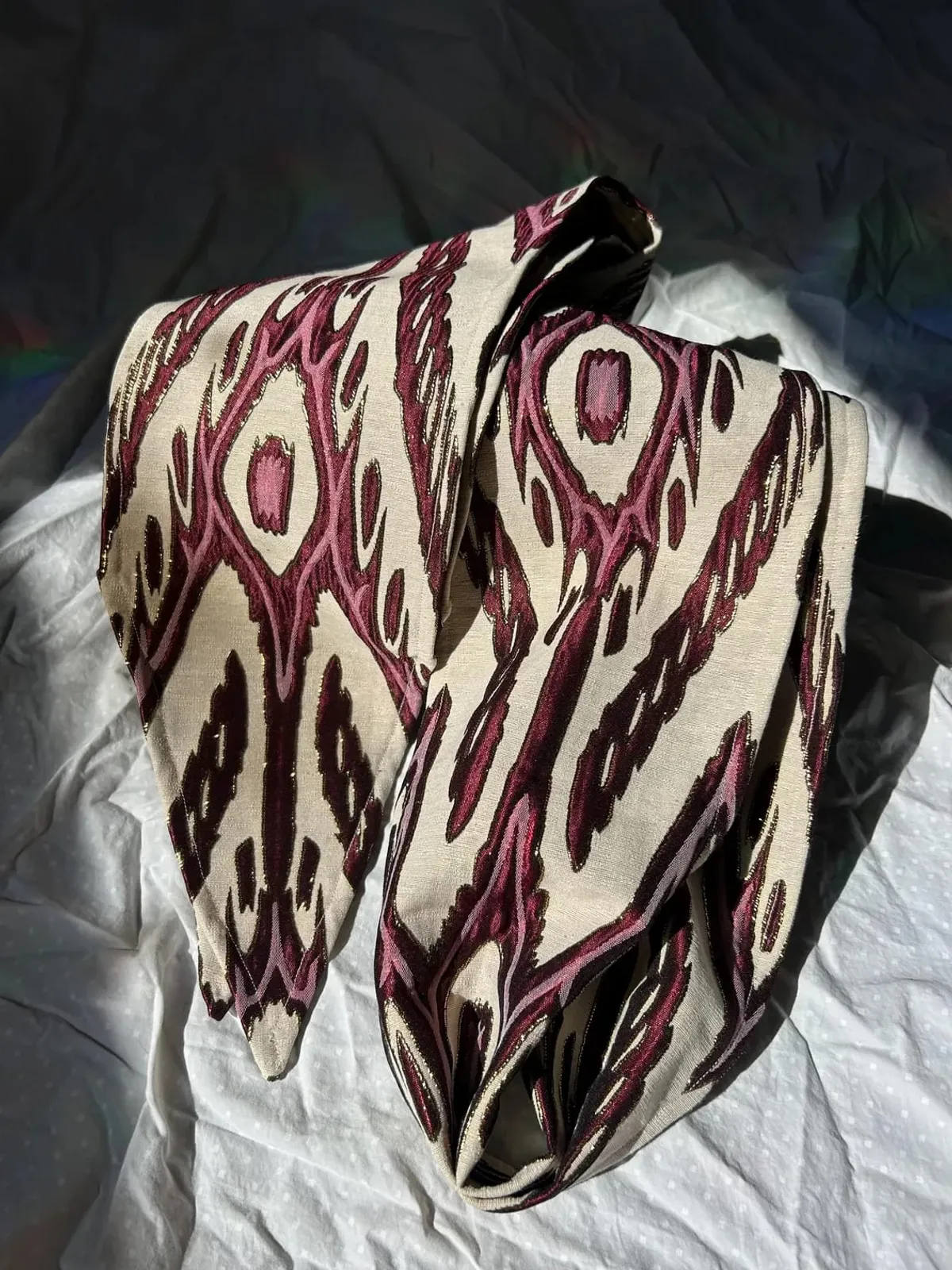
Ikat has become a popular enough look that it’s easy to buy a printed imitation without realizing that’s what you’re getting — the pattern is recognizable now even to people who’ve never heard the word “abrbandi.” That’s not a complaint about the print itself; it’s just useful to know which one you’re paying for. Here’s what actually separates the two, in terms you can check with your own hands before you buy.
Look at the edges of the color
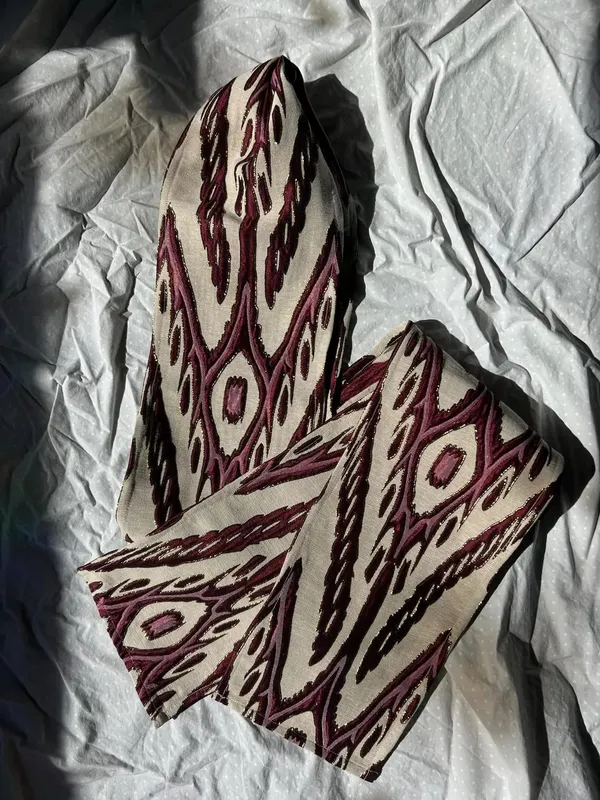
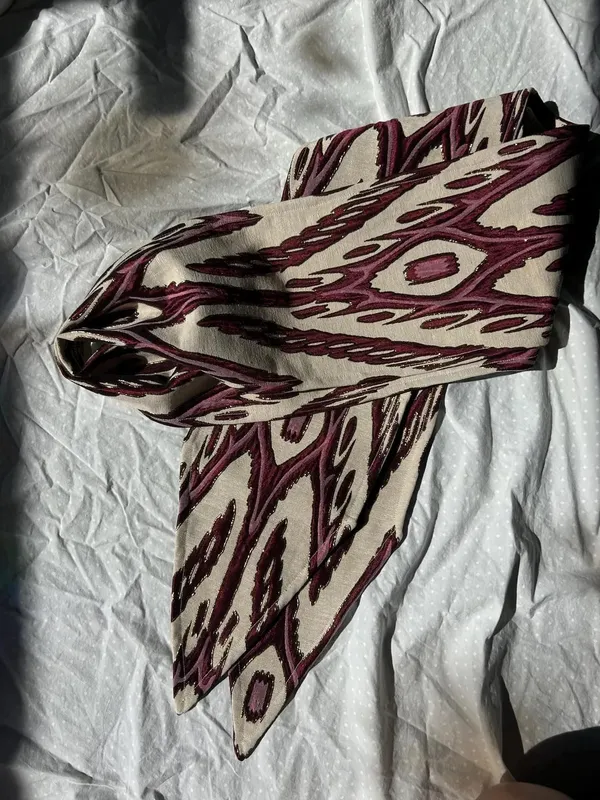
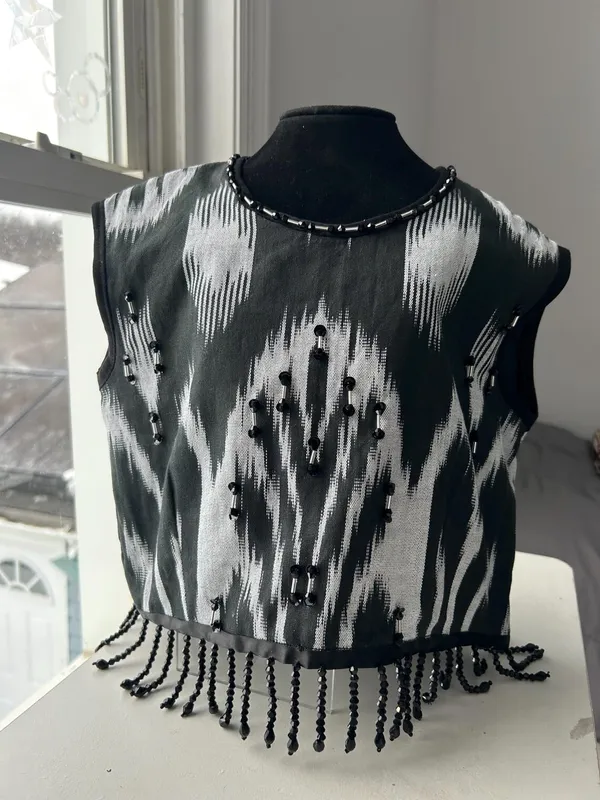
This is the most reliable tell. In handwoven ikat, every boundary between two colors has a soft, slightly blurred quality — the dye genuinely migrated a little under the resist binding before the thread was woven, so the edge feathers instead of stopping cleanly. A print lays ink down in one pass, so its edges are crisp and even, sometimes with a faint halo from the printing process itself, but never that organic soft-shattered bleed. Hold the fabric a few inches from your eyes and look at where one color meets the next. Sharp line, no gradient: printed. Soft, uneven feathering: woven.
Check for asymmetry
Traditional ikat motifs are often mirrored or repeating, and a print will render that mirroring perfectly — every “wing” of the motif identical to its pair, pixel for pixel. Handwoven ikat can’t do that. Because each thread was bound and dyed individually before weaving, and the weaver had to hand-tension hundreds of dyed warp threads into alignment, the two halves of a motif are always close but never exact. One point sits a hair off from its mirror. That slight imperfection isn’t a flaw — it’s proof of the process.
Turn it over
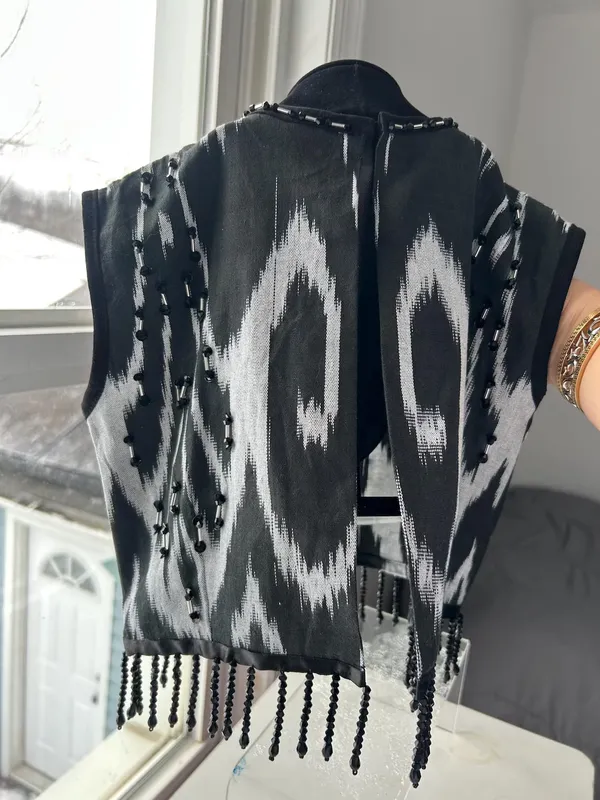
The back tells you almost everything. A woven pattern is structural, not surface-applied, so it comes through to the reverse side of the fabric — softer and less saturated than the front, but genuinely visible, because the color lives in the thread itself. A printed pattern is ink sitting on top of plain fabric, so the back is usually flat, pale, or blank, with none of the front’s pattern showing through. If you can’t find any trace of the design on the reverse side, you’re looking at a print.
Trust the weight and the shine
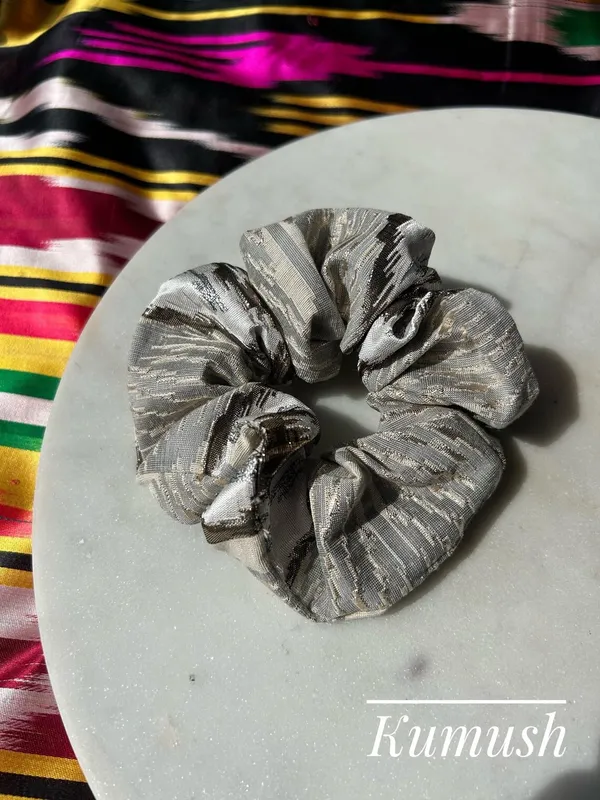
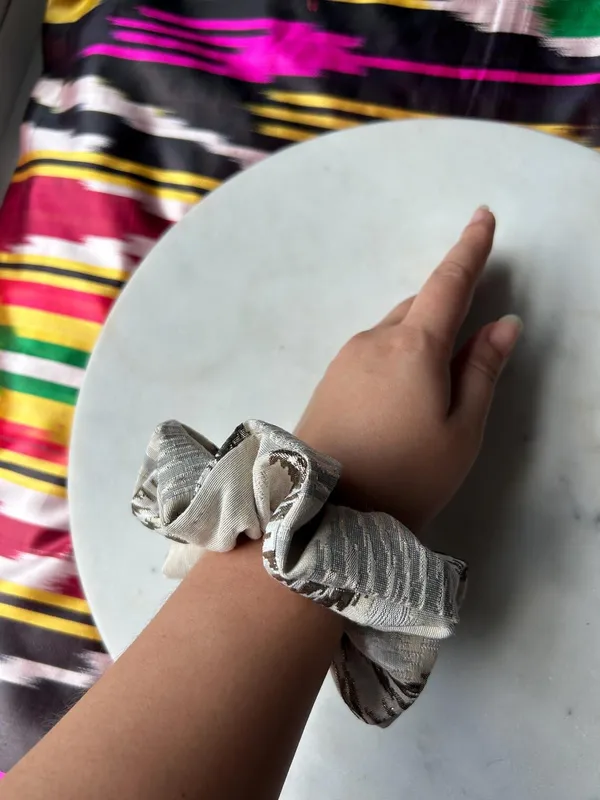
Handwoven silk ikat has real body — it holds a fold, has some structure to it, and catches light with the particular sheen of woven silk rather than a flat printed matte. A synthetic print substrate tends to feel thinner and more uniformly slippery, without that same depth. It’s a softer signal than the other three, but combined with them, it’s usually the final confirmation.
None of this is about shaming a print for existing. It’s about knowing which one is in your hands — and what you’re actually paying for when the price reflects the difference.