Abrbandi: How the Pattern Gets Into the Thread
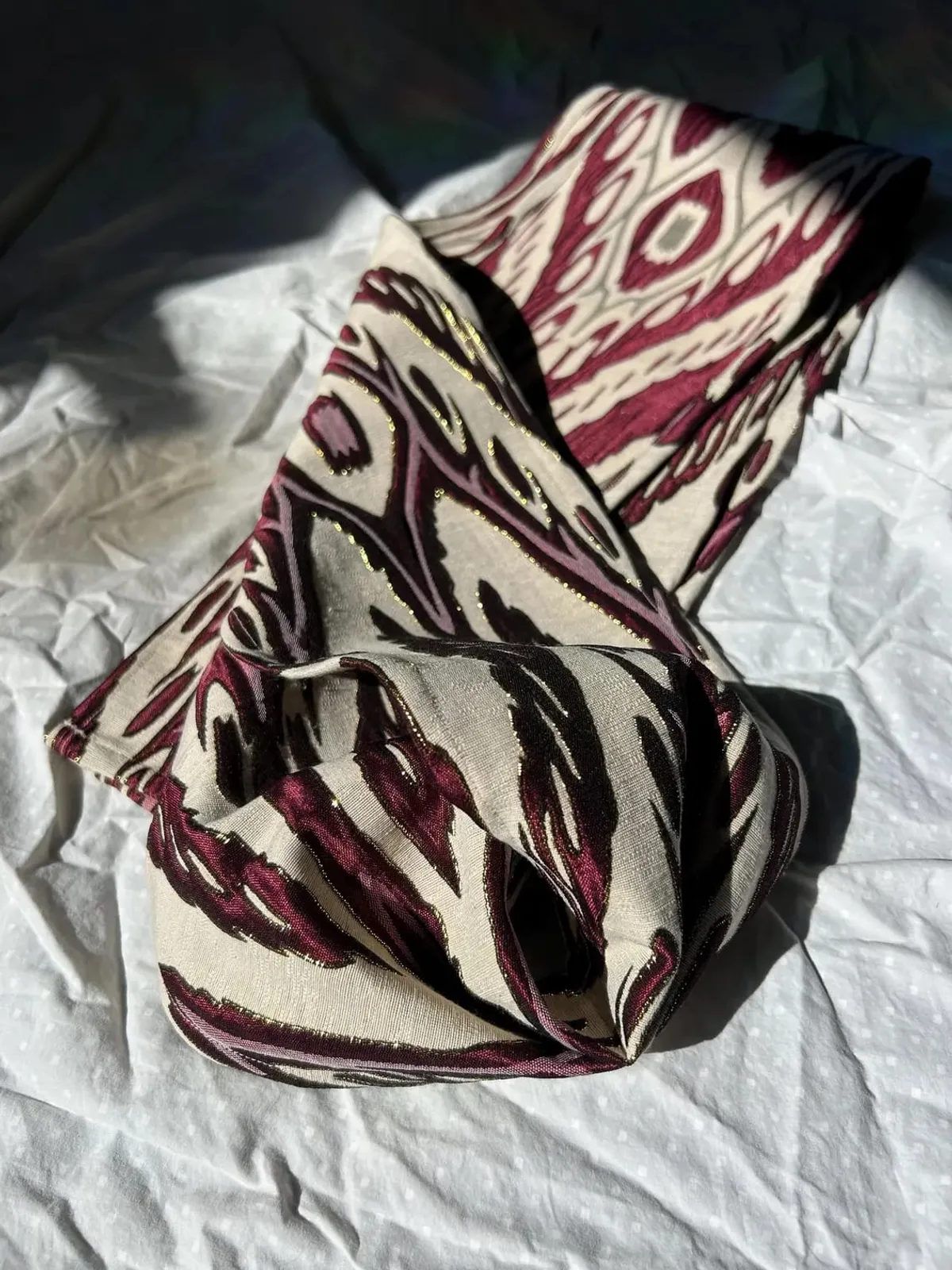
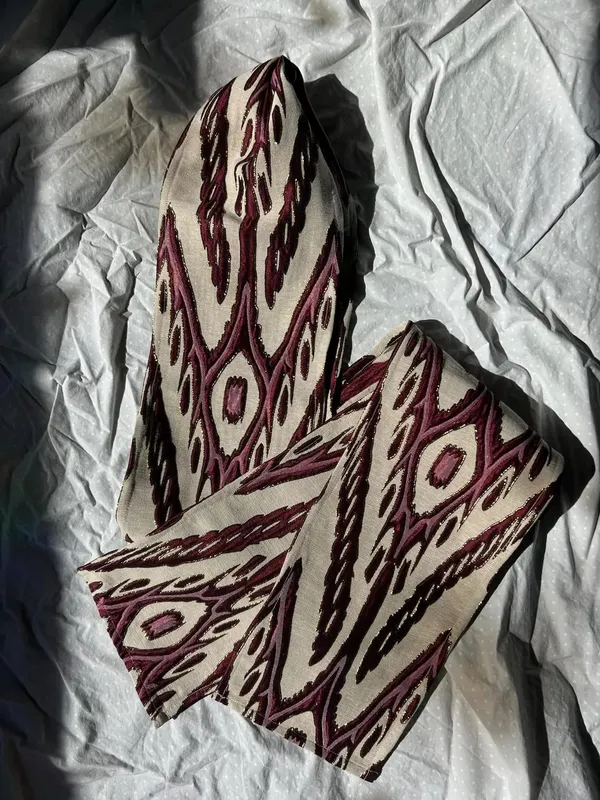
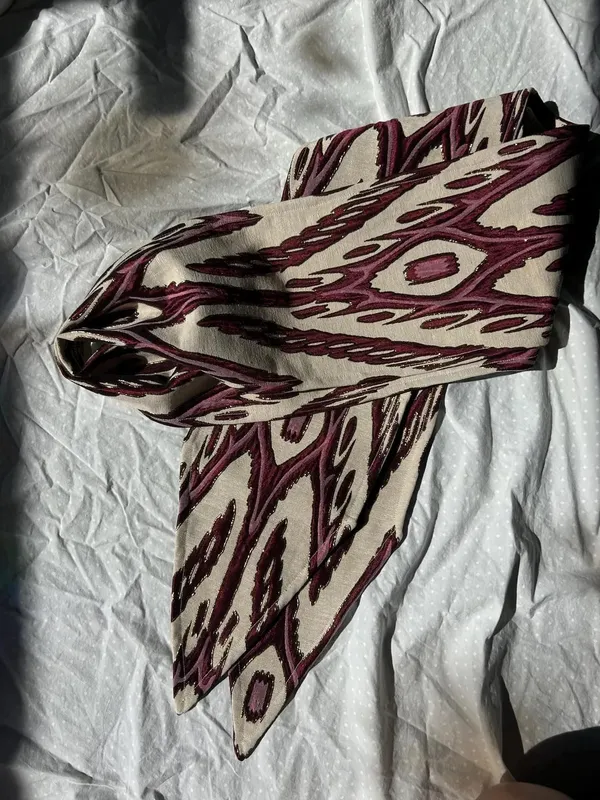
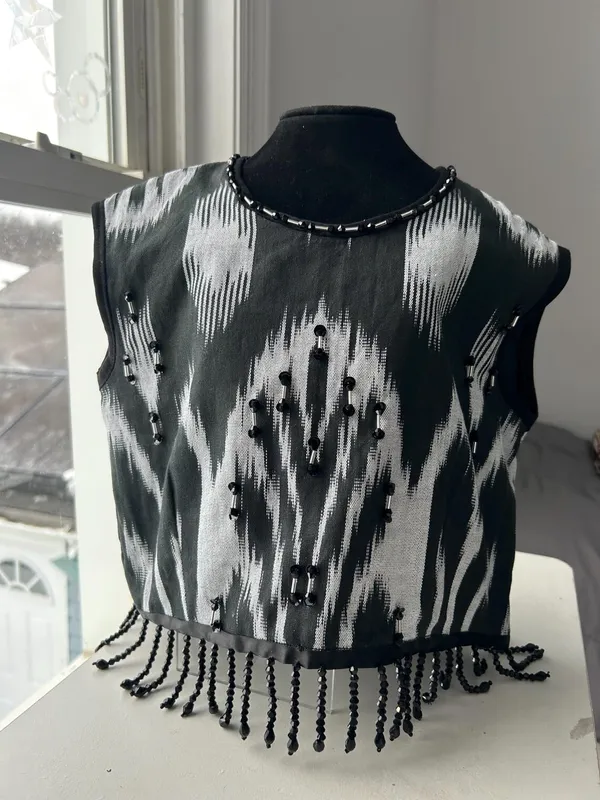
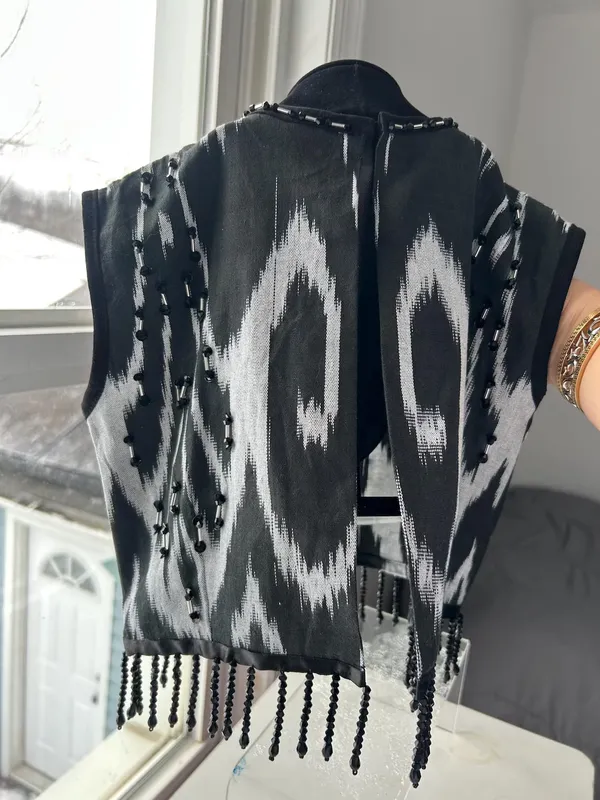
The word people usually reach for is “print.” It isn’t one. Every pattern you see in atlas ikat exists in the thread before the fabric does — it’s woven into being, not stamped onto a finished surface. The process that gets it there is called abrbandi, and it happens entirely before a loom is involved.
Bind
It starts with the warp threads — the long threads that will run the length of the fabric — stretched out on a frame in a tight bundle. A weaver marks out where the pattern needs color and where it needs to stay bare, then binds those sections off tightly, traditionally with waxed thread or strips of material tough enough to resist dye completely. Whatever gets bound stays the base color. Whatever’s left exposed takes the dye.
This is the part that determines everything downstream. The bindings are the pattern, laid out in negative, thread by thread, entirely by hand and entirely by eye — there’s no printed template underneath.
Dye
The bound bundle goes into the first dye bath, and comes out with color everywhere except under the bindings. Then some of those bindings come off, more get added elsewhere, and the bundle goes back in for the next color. A pattern with four or five colors means four or five full cycles of bind, dye, unbind, rebind — each one has to register correctly against the one before it, or the motif drifts.
That’s also where the signature soft edge comes from. Dye doesn’t stop in a hard line at the binding — it migrates a little under the wrapped thread before it’s fully resisted, so the boundary between colors comes out feathered rather than crisp. A print can fake a lot of things. It can’t fake dye actually bleeding into fiber it was never meant to reach.
Weave
Only once the dyeing is finished does the thread go on the loom. The weaver’s job at this stage is less “creating” the pattern and more coaxing it back into alignment — the dyed warp threads have to be tensioned and adjusted by hand so the motif each one carries lines up with its neighbors and the design snaps into focus as the weft locks it in place. Get that tensioning slightly wrong and the pattern reads as blurred or doubled, which is part of why even two pieces cut from the same run of yardage never look quite identical.
By the time the fabric comes off the loom, the color has been through a bound thread, a dye bath, and a hand-tensioned weave — three separate places for the pattern to shift, which is exactly why it never repeats the same way twice. That’s not a flaw to design around. It’s the whole point of the technique.